


You don’t need a massive change to transform your life. You need consistency. The concept of becoming 1% better every day isn’t about dramatic overhauls. It’s about small changes that compound over time. James Clear made this clear in his book Atomic Habits.
Most people overestimate what they can do in a day. They underestimate what they can achieve in a year. This article shows you exactly how to harness the power of marginal gains. You’ll discover practical strategies that fit into your busy life today.
The math is simple. If you improve by just 1% per day, you’ll be 37 times better after one year. That’s the compound effect in action. Let’s explore how to make this theory work in the real world.
The Concept of 1% Better Every Day
The idea of getting slightly better each day comes from a simple mathematical truth. Small improvements compound. When you get 1 percent better every day for a year, you don’t end up just 365% better. You end up nearly 38 times better.
This isn’t just theory. Athletes use this principle. Businesses apply it. Successful people live by it. The concept behind Atomic Habits is that tiny behaviors create remarkable results over time.
Here’s what matters: consistency beats intensity. You don’t need perfect days. You need persistent effort. One small improvement today. Another tomorrow. That’s the way forward.
Why Small Changes Beat Big Transformations
Your brain resists dramatic change. It’s designed that way for survival. But small changes slip past your mental resistance. They don’t trigger the fear response that kills motivation.
Consider this example. You want to read more. Setting a goal to read 50 books this year feels overwhelming. Reading just one page per day? That’s manageable. Yet one page daily means finishing multiple books by year’s end.
Large Goals
Big goals often create big resistance. Your mind sees the massive gap between where you are and where you want to be.
Small Changes
Tiny improvements build sustainable momentum. Your brain accepts minor adjustments without triggering resistance mechanisms.
Psychological Impact
The mental difference between approaches shapes outcomes. Small wins create positive feedback loops.
Practical Results
Real-world outcomes favor the incremental approach. Consistency compounds into transformation.
The Mathematics Behind Compound Improvement
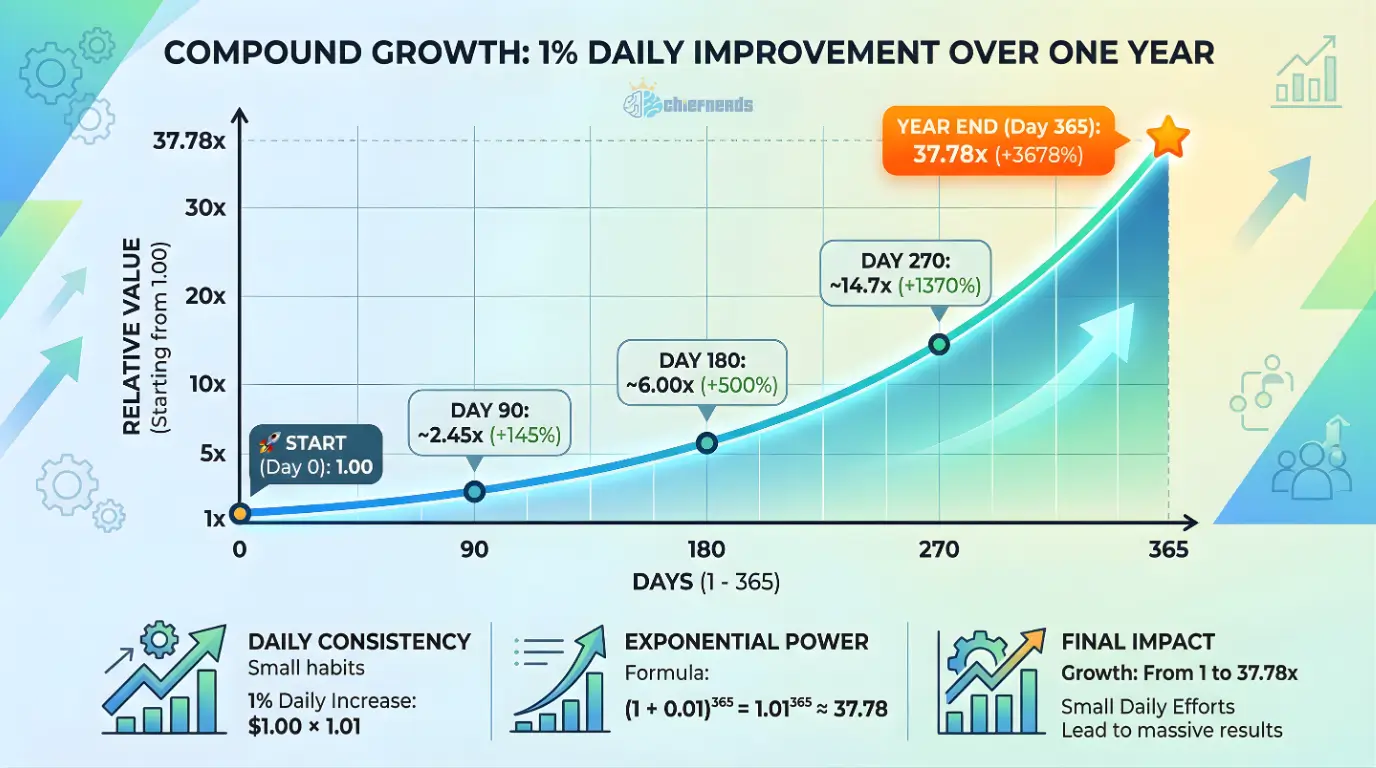
Let’s break down the numbers. Start at 1.00 (your baseline). Get 1% better. You’re now at 1.01. Tomorrow, another 1%. You’re at 1.0201. This continues, building on itself.
After one week: 1.07. Not impressive yet. After one month: 1.35. Starting to show gains. After three months: 2.46. Now we’re talking real progress. After one year: 37.78. That’s transformation.
Key Insight
The first weeks show minimal gains. Most people quit here. But around day 90, the curve starts rising noticeably. By day 180, results become obvious. This is where patience pays dividends.
The flip side matters too. Getting 1% worse per day leads to decline. After a year of 1% daily decline, you’re down to 0.03 of where you started. Small bad habits compound into serious problems.
Building Your Foundation
You can’t improve what you don’t measure. Start by establishing your baseline. Where are you right now in the areas you want to improve? Be honest. Write it down.
Pick one thing to focus on first. Not five things. One. Trying to become 1% better at everything simultaneously splits your attention. Choose the area that creates the biggest impact on your life right now.
Identifying Your Improvement Areas
Look at your day yesterday. What took most of your time? Where did you waste energy? Which activities moved you forward? These answers reveal your improvement opportunities.
Common categories include health habits, skill development, relationship quality, financial behaviors, and professional competence. Pick the category that matters most to your current goals.
Creating Measurable Micro-Goals
Vague intentions don’t work. “Get healthier” isn’t measurable. “Walk 2,000 steps per day” is. Your goal needs a number. It needs specificity.
Break your larger goal into the smallest possible daily action. If you want to write a book, don’t set “write every day” as your goal. Set “write 200 words per day.” That’s concrete. You can track it.
Pro Tip
Your micro-goal should take less than 15 minutes. If it takes longer, make it smaller. You’re building the habit first. You can increase volume later once consistency is established.
Use the “two-minute rule” from habit formation theory. Your new behavior should take no more than 2 minutes to start. Want to exercise more? Your habit is “put on workout clothes.” The rest follows naturally.
How to Become 1% Better Every Day
Theory means nothing without execution. Here are specific strategies you can implement today. These work because they’re simple, measurable, and sustainable.
The Power of Habit Stacking
Attach your new small change to an existing habit. This is habit stacking. Your brain already executes certain behaviors automatically. Leverage that automation.
Example: You already brush your teeth every day. After brushing your teeth, do two push-ups. The established habit (brushing) triggers the new habit (push-ups). No willpower needed. Just sequence.
Morning Stacks
Link improvements to your morning routine. After making coffee, read one page. After a shower, practice one minute of breathing exercises.
Best for: Learning and mental habits
Transition Stacks
Use moments between activities. Before starting work, write three priorities. Before lunch, do 20 desk stretches.
Best for: Physical and organizational habits
Evening Stacks
Connect to bedtime routine. After dinner, plan tomorrow. Before bed, journal one win from today.
Best for: Reflection and planning habits
Making Small Changes Visible
What gets measured gets improved. Track your daily wins. Use a simple method: a calendar with checkmarks. Each day you complete your 1% improvement, mark an X.
This creates a visual chain. Your goal becomes “don’t break the chain.” After a week of consecutive days, you don’t want to break your streak. Momentum builds naturally.
Use technology if it helps. Apps track habits automatically. But a simple paper calendar works just as well. The key is immediate visual feedback. You should see your progress every day.
The Two-Day Rule for Consistency
You’ll miss days. Life happens. The two-day rule saves you: never miss twice in a row. Missing one day is maintenance. Missing two days in a row starts a new bad habit.
When you miss a day, your next day becomes critical. Do your 1% improvement no matter what. Even if it’s smaller than usual. Completion matters more than perfection here.
Weekly Review and Adjustment
Set aside 15 minutes each week. Review your progress. Count your completed days. Analyze your misses. What patterns emerge? When do you struggle most?
Adjust your approach based on data. If you miss every Friday, your Friday context needs to be examined. Maybe you’re too tired. Maybe your schedule is unpredictable. Change the time or lower the bar for Fridays specifically.
Effective Review Questions
Avoid These Review Mistakes
Overcoming Challenges
You’ll hit walls. Everyone does. The initial excitement fades around week three. Progress feels invisible. This is normal. This is exactly when most people quit.
Understanding common challenges prepares you to overcome them. You’re not failing. You’re encountering predictable obstacles that everyone faces on the path to getting better every day.
The Plateau Period Explained
Improvement isn’t linear. You’ll make progress, then plateau. Then progress again. These flat periods frustrate people. They think nothing is happening.
But something is happening. Your body and brain are consolidating gains. Skills are becoming automatic. The plateau is preparation for your next jump forward.
Critical Moment
Most people abandon their 1% improvement habits during plateaus. They think the method stopped working. It didn’t. They just can’t see the underground root growth that precedes visible progress. Stay consistent through this period.
The solution is simple: keep going. Don’t change your habit during a plateau. Don’t increase intensity. Don’t switch strategies. Just maintain your daily commitment. The breakthrough comes to those who persist.
Dealing with Motivation Drops
Motivation is unreliable. It comes and goes. You can’t control it. What you can control is your system. Build a system that works regardless of motivation levels.
On low-motivation days, reduce the bar. Your goal is just to show up. Do the minimum version. One push-up instead of ten. One sentence instead of 200 words. Consistency beats volume every time.
Handling Life Disruptions
Travel, illness, family emergencies, work crises. Life disrupts routines. This doesn’t mean you’ve failed. It means you’re human.
Plan for disruptions. Have a “travel version” of your habit. Have a “sick day version.” Have a “crisis version.” These modified versions keep your chain alive even when normal routines break down.
Adaptation Strategies
Flexibility within structure maintains progress during chaos. Create multiple versions of your improvement habit.
- Identify your minimal viable habit (absolute smallest version)
- Create context-specific adaptations (travel, sick, busy)
- Set trigger reminders for unusual circumstances
- Accept imperfect execution over zero execution
- Resume normal routine immediately after the disruption
Preventing Burnout While Pursuing Progress
The goal isn’t more. It’s better. Don’t confuse the two. Adding more habits too quickly leads to burnout. Your brain can only automate so many new behaviors at once.
Master one improvement completely before adding another. “Completely” means you do it automatically, without thinking, at least 80% of the days. This typically takes 8-12 weeks, not the mythical 21 days.
Rest matters. Your improvement includes recovery. Schedule rest days where you maintain but don’t advance. This prevents exhaustion and keeps your system sustainable in the long term.
Scaling Your 1% Gains Over Time
Once your habit is solid, you can increase difficulty. But do it gradually. A 10% increase in difficulty per month works well. More than that, risks breaking your consistency.
When and How to Increase Difficulty
Signs you’re ready to level up: Your current habit feels easy. You complete it most days without struggle. You finish before the time limit. These indicators mean your capacity has grown.
Increase one variable at a time. If you’re writing 200 words daily, go to 220 words. Not 400. If you’re walking 2,000 steps, aim for 2,200. Small increments maintain sustainability.
| Month | Activity Level | Time Investment | Expected Difficulty |
| Month 1-2 | Baseline (establish consistency) | 5-10 minutes per day | Low (building automation) |
| Month 3-4 | +10% increase | 10-12 minutes per day | Moderate (challenging comfort) |
| Month 5-6 | +10% increase | 12-15 minutes per day | Moderate (new normal) |
| Month 7-9 | +10% increase | 15-18 minutes per day | Noticeable but manageable |
| Month 10-12 | +10% increase | 18-22 minutes per day | Significant transformation visible |
Adding Additional Improvement Habits
After three months of consistency with one habit, you can add a second. Choose a different life area. Don’t add similar habits simultaneously.
Example: If your first habit was physical (daily walking), your second could be mental (daily reading) or professional (skill practice). Spreading across categories prevents competition for the same resources, like time or energy.
Building a Comprehensive Improvement System
Over a year, you can establish four solid habits using this approach. Four automatic improvements across different life areas create genuine transformation.
Your system should cover key categories: physical health, mental development, relationship quality, and professional growth. One habit in each category builds a better, more balanced version of yourself.
Measuring and Tracking Your Progress
You can’t improve what you don’t measure. Tracking creates awareness. Awareness drives behavior change. Your tracking system doesn’t need to be complex. It needs to be consistent.
Simple Tracking Methods That Work
The simplest method: a paper calendar. Mark an X each day you complete your improvement. Visual. Immediate. No app needed. This works for 80% of people.
Digital options work too. Habit tracking apps provide reminders and statistics. They show streaks and completion rates. Use technology if it helps. But don’t let app complexity become a barrier to starting.
Key Metrics to Monitor
Track three numbers weekly: completion rate (how many days you succeeded), ease rating (how difficult it felt), and satisfaction level (how good you felt afterward). These metrics tell you if your habit is sustainable.
Daily Tracking
Record immediately after completing your improvement. Mark completion and note any obstacles encountered.
Weekly Review
Assess patterns and adjust approach. Identify success factors and obstacle trends.
Monthly Analysis
Evaluate overall progress and decide on adjustments. Celebrate milestones and plan the next phase.
Using Progress Data to Stay Motivated
Numbers tell stories. A 70% completion rate over three months represents 63 days of improvement. That’s 63 times you chose progress over comfort. That’s worth celebrating.
Compare yourself only to your past self. Are you more consistent this month than last? That’s winning. Progress isn’t perfection. It’s an improvement over time.
Adjusting Based on Tracking Insights
Your tracking data reveals patterns. Maybe you always skip Thursdays. Why? Maybe you’re too tired. Solution: move your Thursday improvement to Thursday morning instead of the evening.
If ease ratings consistently show “very difficult,” your habit is too ambitious. Reduce it. The goal is sustainable consistency, not heroic effort that leads to burnout.
Common Mistakes to Avoid
Most people who try the 1% improvement approach fail not because the concept doesn’t work. They fail because they make predictable mistakes. Avoid these errors and your success probability skyrockets.
Starting Too Big
The biggest mistake: setting initial habits too large. You’re excited. You commit to 30 minutes of daily exercise. That’s not 1% better. That’s trying to jump 50% better immediately.
Start smaller than feels reasonable. If you think “10 minutes is too easy,” that’s the right size. Easy habits build consistency. Consistency builds everything else.
Trying to Improve Everything at Once
You want to improve your health, career, relationships, and finances simultaneously. Understandable. But unrealistic. Your willpower is finite. Spreading it across multiple new habits depletes it completely.
Focus creates results. One habit at a time. Master it. Then add the next. This feels slower initially but produces faster long-term results because habits actually stick.
Expecting Linear Progress
You imagine steady upward progress. Reality includes plateaus, setbacks, and fluctuations. This is normal. This is how actual improvement looks in the real world.
The compound curve isn’t smooth. It’s jagged with an upward trend. Judge your progress over months, not days. Weekly fluctuations mean nothing. Monthly trends mean everything.
What Successful Improvers Do
What Causes Most Failures
Breaking Momentum Without a Recovery Plan
You’ll miss days. The mistake isn’t missing. It’s not having a plan for getting back on track. Most people miss one day, feel guilty, then miss another. The chain breaks, and they quit entirely.
Your recovery plan is simple: whatever happens, do your habit the next day. No excuses. No guilt. Just execute. This single rule prevents complete derailment.
Focusing on Perfection Over Consistency
Perfect execution isn’t the goal. Consistent execution is. Doing your habit imperfectly 7 days a week beats doing it perfectly 2 days a week. Always.
Lower the bar when necessary. Sick day? Do the minimum version. Busy day? Do the minimum version. Traveling? Do the minimum version. Showing up matters more than performing optimally.
Maintaining Momentum for Success
The first month is excitement. The second month is discipline. The third month is habit. Getting to month twelve requires strategies beyond basic consistency.
Creating Environmental Supports
Your environment shapes behavior more than willpower does. Design your space to make good behaviors easy and bad behaviors hard.
Want to read more? Put a book on your pillow. You’ll see it before bed. Want to exercise? Lay out workout clothes the night before. Reduce friction between you and your desired action.
Building Social Accountability
Tell someone about your improvement goal. Not everyone. One person who will check in weekly. Accountability to another human increases completion rates significantly.
Join communities focused on improvement. Online groups, local meetups, accountability partners. Social connection reinforces personal commitment. You’re more likely to maintain habits when others are pursuing similar goals.
Refreshing Your Approach Periodically
After three months, habits can feel stale. Refresh without abandoning. Change the context slightly. Read in a different location. Exercise at a different time. Walk a new route.
Variety within consistency prevents boredom while maintaining the core behavior. You’re still doing your habit. You’re just adding novelty to keep it interesting.
Celebrating Milestones Meaningfully
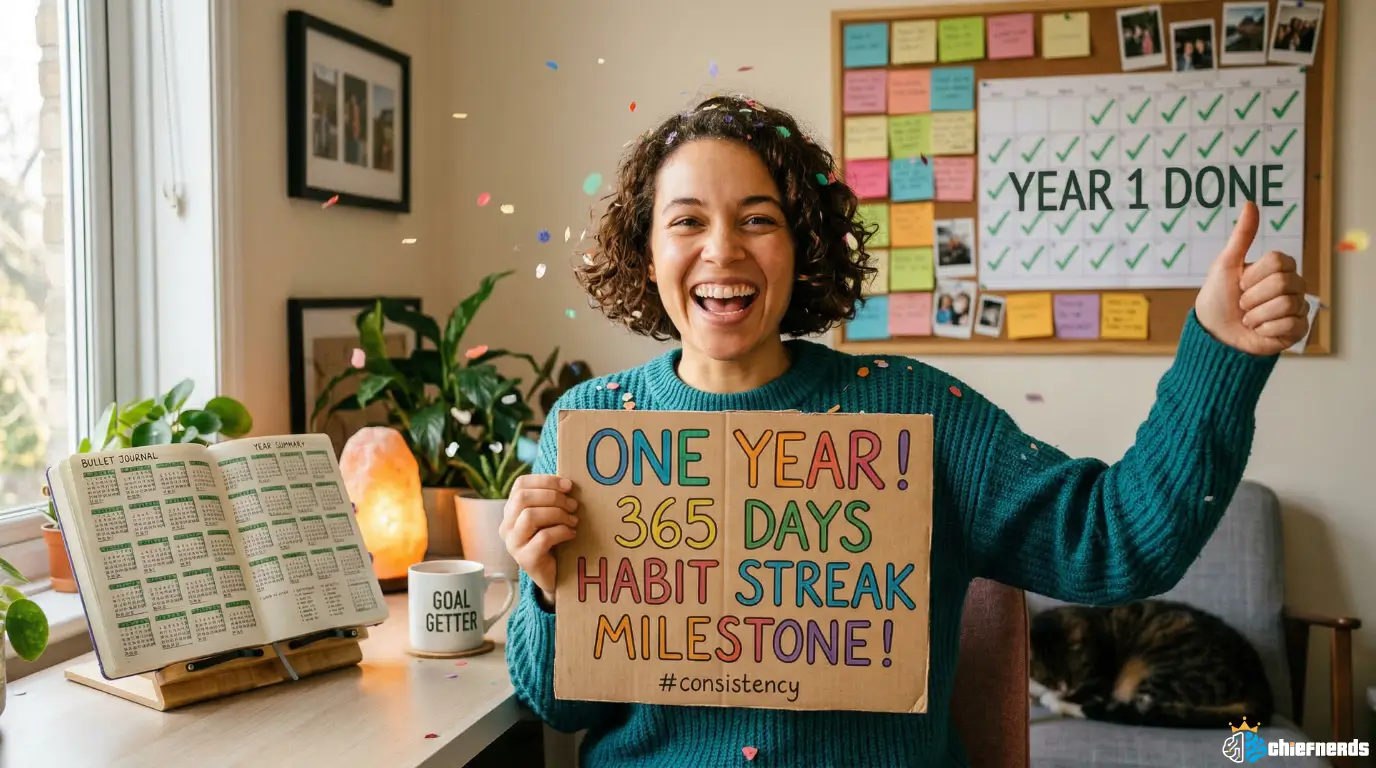
Mark milestone achievements. 30 days consecutive. 60 days total. 90 days consecutive. Celebrate these wins. Not with rewards that contradict your goal, but with recognition of your effort.
The celebration itself becomes part of your motivation system. Knowing a celebration comes at day 100 helps you push through day 87 when motivation is low.
In Summary
You now understand the power of marginal gains. You know how to start small, track progress, and overcome plateaus. The concept is simple. The execution requires commitment.
The compound effect doesn’t care about motivation. It cares about consistency. Show up daily. Make your 1% improvement. Trust the math. Trust the process. Trust that tiny changes compound into transformation.
Start today. Not tomorrow. Choose one area of your life. Define one small improvement. Make it so small it feels almost silly. Then do it. Today. Right now, if possible.
Tomorrow, do it again. The day after, repeat. By week three, you’ll have momentum. By month three, you’ll have a habit. By year one, you’ll have a transformation.
The question isn’t whether the method works. The question is whether you’ll work the method. Will you commit to getting slightly better each day? Will you trust the compound effect?
Your future self is built from today’s choices. Make the choice to improve. Make it small. Make it consistent. Make it daily. That’s how you become 1% better every day. That’s how you build a remarkable life from unremarkable moments.
The compound effect is waiting for you. Start compounding today.
