

Your time is slipping away—every single day. You work harder than ever. Yet somehow, you accomplish less. The to-do list grows. Your energy drains. And the things that truly matter keep getting pushed to tomorrow.
Sound familiar?
- 10 Best Productivity Books to Read
- 1. “Getting Things Done” by David Allen
- 2. “The 7 Habits of Highly Effective People” by Stephen Covey
- 3. “Deep Work” by Cal Newport
- 4. “Atomic Habits” by James Clear
- 5. “Essentialism: The Disciplined Pursuit of Less” by Greg McKeown
- 6. “Eat That Frog!” by Brian Tracy
- 7. “The 4-Hour Workweek” by Tim Ferriss
- 8. “Make Time” by Jake Knapp and John Zeratsky
- 9. “The Power of Habit” by Charles Duhigg
- 10. “The ONE Thing” by Gary Keller and Jay Papasan
- How to Choose the Right Productivity Book for You
- In Summary
You’re not alone. Many people face this exact struggle today. The good news? The solution exists in the pages of proven productivity books that have transformed millions of lives around the world.
These aren’t just books. They’re blueprints for reclaiming your life. Each one offers practical strategies you can implement immediately. No fluff. No theory that doesn’t translate to the real world. Just actionable wisdom from people who’ve cracked the productivity code.
10 Best Productivity Books to Read
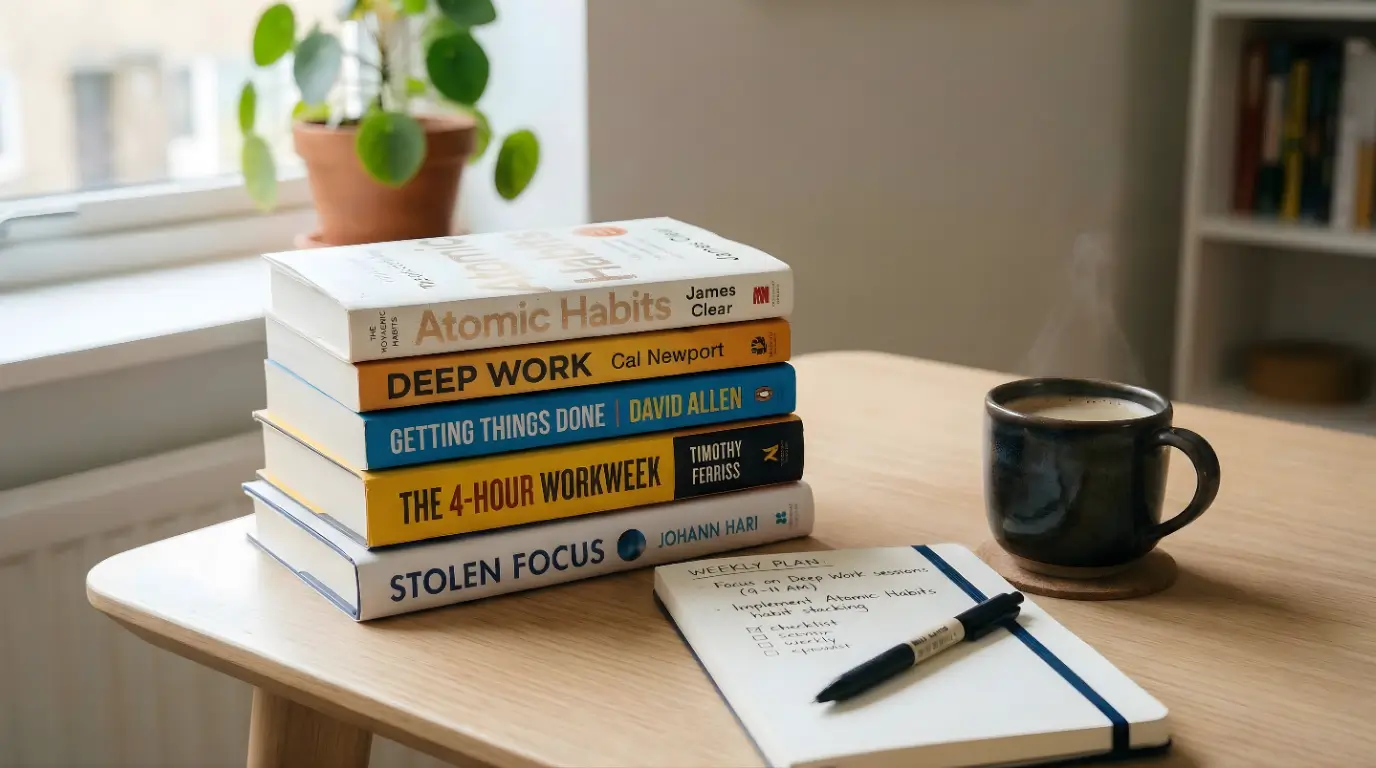
This guide reveals the 10 best productivity books that deliver real results. Books that help you work smarter, not harder. Books that give you back your time and your energy. Books that many people credit with completely changing their approach to work and life.
Ready to stop spinning your wheels? Let’s dive in.
1. “Getting Things Done” by David Allen

Your brain wasn’t designed to store tasks. It was built to process ideas and solve problems.
That’s the revolutionary insight behind David Allen’s masterpiece. This book introduces the GTD system, a methodology that has helped millions of people worldwide achieve stress-free productivity.
What Makes This Book Essential
The David Allen book teaches you to capture everything that has your attention. Every task. Every idea. Every commitment. You get it out of your head and into a trusted system.
Here’s the thing: when your mind stops trying to remember everything, it becomes free to actually think. To create. To focus on what matters right now.
The GTD method breaks down into five simple steps. Capture, clarify, organize, reflect, and engage. Each step builds on the last. Together, they create a framework that handles any amount of incoming work.
Key Takeaways
Many people report feeling lighter after just implementing the first chapter. The mental weight of “remembering to remember” disappears. Getting things done becomes natural instead of stressful.
This isn’t just one of the best productivity books. It’s the foundation that makes everything else work better.
2. “The 7 Habits of Highly Effective People” by Stephen Covey
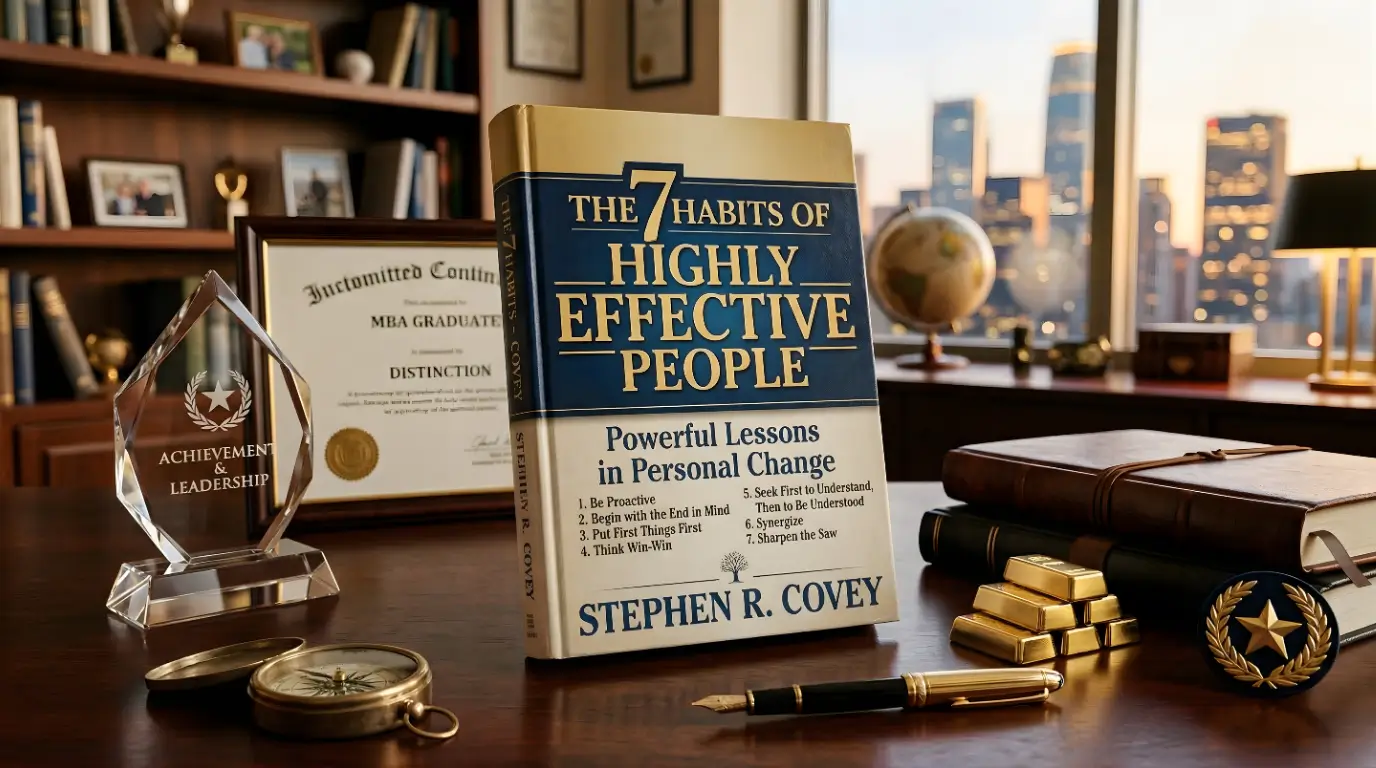
Some books teach tactics. This one changes how you see the entire world.
Stephen Covey’s classic has sold over 40 million copies for one simple reason. It works. The habits highly effective people practice aren’t just about getting more done. They’re about becoming the person who naturally accomplishes meaningful things.
The Power of Character-Based Habits
Stephen Covey built this book on a profound insight. Effectiveness comes from character, not shortcuts. You can’t hack your way to lasting success. You have to grow into it.
The seven habits form a progression. They start with private victories (habits 1-3), move to public victories (habits 4-6), and culminate in continuous renewal (habit 7).
Here’s what that means in practice. First, you take control of yourself. Then, you build powerful relationships with others. Finally, you keep sharpening the saw so you never stop improving.
The Habits That Transform Lives
Private Victories
Public Victories
The seventh habit ties everything together. Sharpen the saw means continuous improvement across four dimensions: physical, mental, social, and spiritual. Neglect any one dimension and your effectiveness suffers.
Many people read this book multiple times. Each reading reveals deeper insights. This is one of those productivity books that grows with you as you grow.
The habits highly effective people develop don’t just make you more productive. They make you more human. More connected. More alive.
3. “Deep Work” by Cal Newport
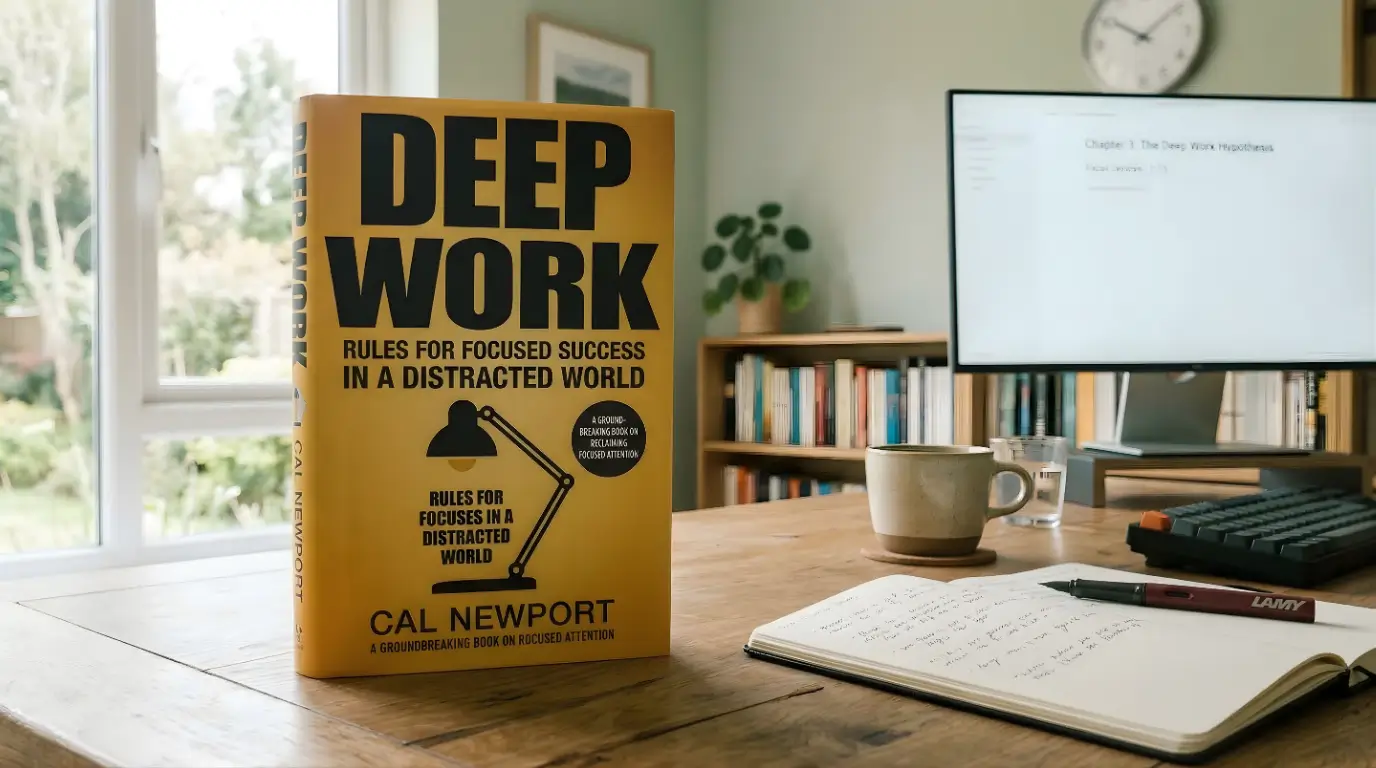
Distraction is killing your potential. Every notification. Every email. Every casual conversation pulls you away from focused work.
Cal Newport proves that the ability to perform deep work is becoming increasingly rare. And therefore increasingly valuable. In a world addicted to constant connectivity, focused attention is your competitive advantage.
Why Deep Work Matters Now More Than Ever
The deep work Cal Newport describes has two core requirements. Extended concentration on cognitively demanding tasks. And freedom from distractions during that time.
Think about last week. How many uninterrupted hours did you spend on your most important work? For most people, the answer is shockingly low.
Newport’s research shows that many people have lost the ability to focus deeply. Their brains have been rewired by constant context-switching. The good news? You can rewire them back.
The Four Rules of Deep Work
- Work deeply: create routines and rituals that minimize willpower depletion
- Embrace boredom: train your brain to resist distraction outside work hours, too
- Quit social media: ruthlessly evaluate which tools truly add value to your life
- Drain the shallows: minimize shallow work and protect your deep work time
The book provides multiple approaches to scheduling deep work. Some people work deeply for three hours every morning. Others dedicate entire days. Still others retreat for weeks at a time.
The specific schedule matters less than the commitment. Deep work demands intentionality. You can’t accidentally fall into a state of deep concentration. You have to build the structures that make it possible.
Cal Newport’s work deep philosophy has influenced countless professionals. Developers who write better code. Writers who produce better books. Researchers who make breakthrough discoveries.
This productivity book challenges everything modern culture tells you about staying connected. It offers a better way.
4. “Atomic Habits” by James Clear
You don’t need massive changes. You need tiny improvements that compound over time.
James Clear’s Atomic Habits reveals the surprising power of small habits. Get 1% better each day, and you’ll be 37 times better after one year. That’s not motivational speaking. That’s mathematics.
The Science Behind Tiny Changes
Habits are the compound interest of self-improvement. The book breaks down exactly how habits work and how to build good ones while breaking bad ones.
Clear introduces the Four Laws of Behavior Change. Make it obvious. Make it attractive. Make it easy. Make it satisfying. These four laws work for building new habits and breaking old ones (just reverse them).
Here’s what makes this approach revolutionary. You stop relying on willpower. Instead, you design your environment to make good habits inevitable and bad habits difficult.
Practical Strategies That Work
The identity shift is crucial. Don’t say “I want to run a marathon.” Say “I am a runner.” The goal isn’t to read books. It’s to become a reader. Small distinction. Massive difference.
Many people report that this book finally helped them make habits stick. Previous attempts relied on motivation, which comes and goes. This productivity book teaches systems that work regardless of how you feel.
The habits you build today determine the life you live tomorrow. Atomic Habits shows you exactly how to build the right ones.
5. “Essentialism: The Disciplined Pursuit of Less” by Greg McKeown
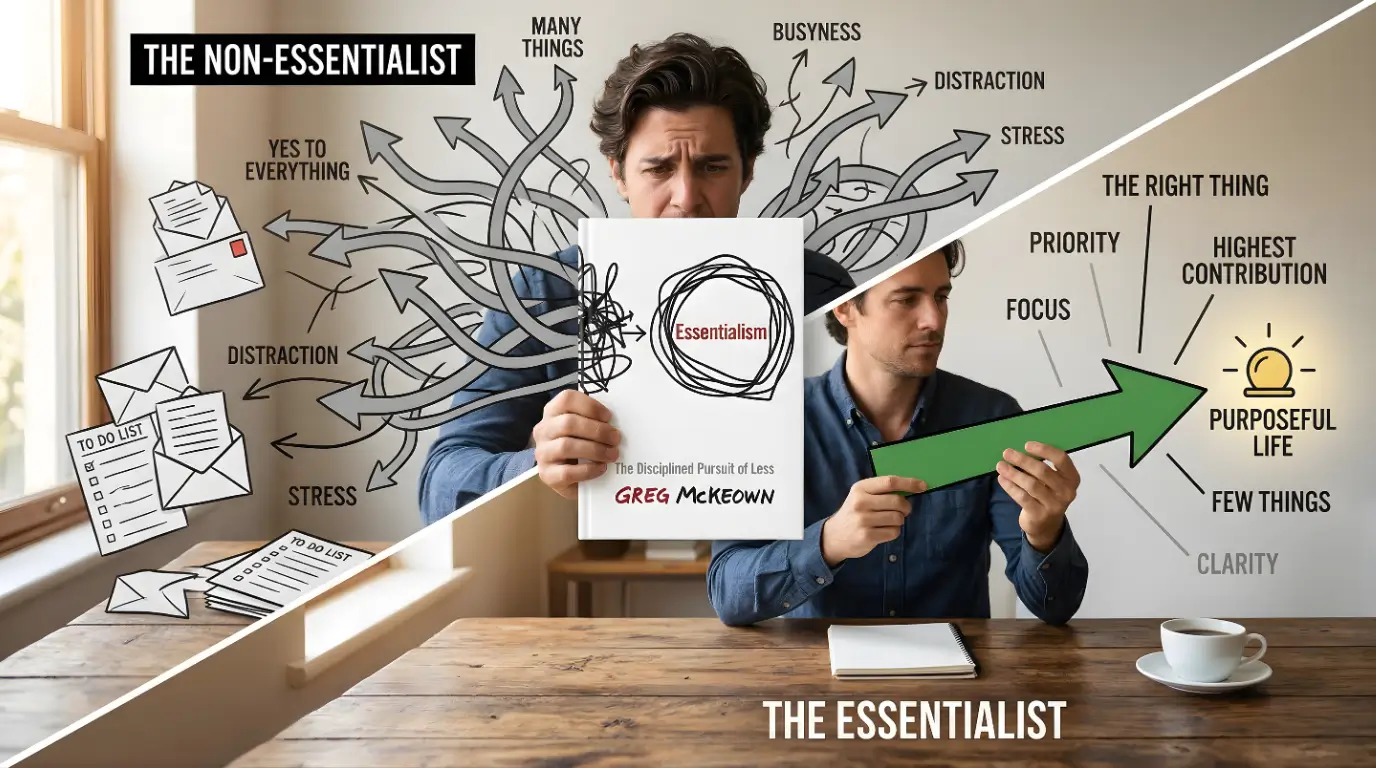
What if you could do less but accomplish more? Not by working harder. By choosing better.
Greg McKeown’s Essentialism challenges the cult of busyness. Being busy doesn’t equal being productive. Often, it means you’re saying yes to too many things that don’t really matter.
The Way of the Essentialist
Essentialism isn’t about time management. It’s about choosing where to invest your time and energy. It’s the disciplined pursuit of less but better.
The book teaches three core principles. Fewer but better. The right thing, right now. The power of choice. These principles work together to eliminate the nonessential and focus your energy on what truly contributes to your goals.
McKeown provides a systematic process. Explore and evaluate. Eliminate the nonessential. Execute what remains. Each phase includes specific strategies and real-world examples.
Essential Strategies
What Essentialists Do
What Non-Essentialists Do
The power of this productivity book lies in its simplicity. You don’t need to do more things. You need to do the right things. And that requires brutal honesty about what those things actually are.
Many people struggle with saying no. They fear missing opportunities or disappointing others. McKeown shows that every yes to something nonessential is a no to something that matters.
Your time and energy are finite. Essentialism helps you invest both wisely.
6. “Eat That Frog!” by Brian Tracy

That task you’re avoiding? The one you keep pushing to tomorrow? That’s your frog. And you need to eat it first thing in the morning.
Brian Tracy’s classic cuts through complexity with one powerful principle. Tackle your biggest, most important task first thing each day. Everything else becomes easier afterward.
The 21 Principles of Maximum Productivity
The book delivers 21 practical methods for overcoming procrastination and getting more done. Each one is simple. Each one works immediately.
Tracy’s approach combines psychology with practicality. He understands why people procrastinate. And he provides specific techniques to overcome each psychological barrier.
The core metaphor is brilliant. Mark Twain once said that if you eat a live frog first thing in the morning, nothing worse will happen to you the rest of the day. Your frog is your most challenging task. The one with the biggest impact on your goals.
Key Principles to Apply Today
One of the most powerful techniques is the ABCDE method. List all tasks. Mark A tasks (must do), B tasks (should do), C tasks (nice to do), D tasks (delegate), and E tasks (eliminate). Never do a B task when an A task remains undone.
This productivity book transforms your relationship with difficult tasks. Instead of avoiding them, you tackle them head-on. The psychological relief is immediate. The productivity gains compound over time.
Many people credit this book with finally breaking their procrastination habit. The principles are timeless. The results are immediate.
7. “The 4-Hour Workweek” by Tim Ferriss

What if retirement planning is flawed? What if you could live like a millionaire today without actually being one?
Tim Ferriss challenges every assumption about work and life. This book isn’t about working less. It’s about working smarter and designing a lifestyle that doesn’t wait for retirement.
The DEAL Framework
Ferriss provides a four-step system he calls DEAL. Definition, Elimination, Automation, and Liberation. Each step builds toward the ultimate goal of joining the New Rich, people who abandon the deferred-life plan.
The Definition means challenging assumptions about work and success. Elimination applies the 80/20 principle ruthlessly. Automation builds systems and uses virtual assistants. Liberation enables location independence and mini-retirements.
The book’s controversial aspects spark debate. Some strategies won’t work for everyone. But the underlying principles about efficiency, outsourcing, and lifestyle design remain powerful.
Game-Changing Concepts
One practical tip transforms productivity immediately. Check email only twice per day at predetermined times. This one change saves hours each week and dramatically improves focus.
Many people report that this book changed their entire worldview. It has permission to question conventional wisdom about careers and success. It offers concrete alternatives to the traditional path.
Whether you implement every strategy or just a few, this productivity book expands what you believe is possible. And that expansion often leads to breakthrough results.
8. “Make Time” by Jake Knapp and John Zeratsky
Your attention is under attack. Technology companies engineer apps to be addictive. Your workplace creates constant urgency. Modern life leaves no room for what matters.
Jake Knapp and John Zeratsky spent years designing products at Google and YouTube. They watched technology steal people’s time and attention. Then they developed a system to take it back.
The Daily Highlight System
The book centers on one question. What’s going to be the highlight of your day? Not what’s urgent. Not what others want from you. What matters most to you today?
Each morning, you choose one activity to prioritize. Maybe it’s a project you care about. Maybe it’s time with family. Maybe it’s exercise or learning something new. This becomes your Highlight.
Then you design your day around protecting time for that Highlight. You defend it from the Busy Bandwagon (endless tasks) and the Infinity Pools (bottomless apps like email and social media).
The Four-Step Daily Framework
- Highlight: Choose the one thing you want to make time for today
- Laser: Block distractions and create focus for your Highlight
- Energize: Keep your energy high through movement, food, sleep, and nature
- Reflect: Note what worked and adjust your tactics tomorrow
What makes this productivity book different is the experimental approach. The authors provide 87 specific tactics. You test different ones each day. Keep what works for you. Discard what doesn’t.
The tactics range from simple to radical. Turn off notifications. Delete social media apps. Skip the morning news. Work on a disconnected device. Each one helps you reclaim attention and energy.
Many people love this book because it doesn’t demand perfection. Miss a day? Start again tomorrow. The system builds momentum through small wins, not guilt.
9. “The Power of Habit” by Charles Duhigg
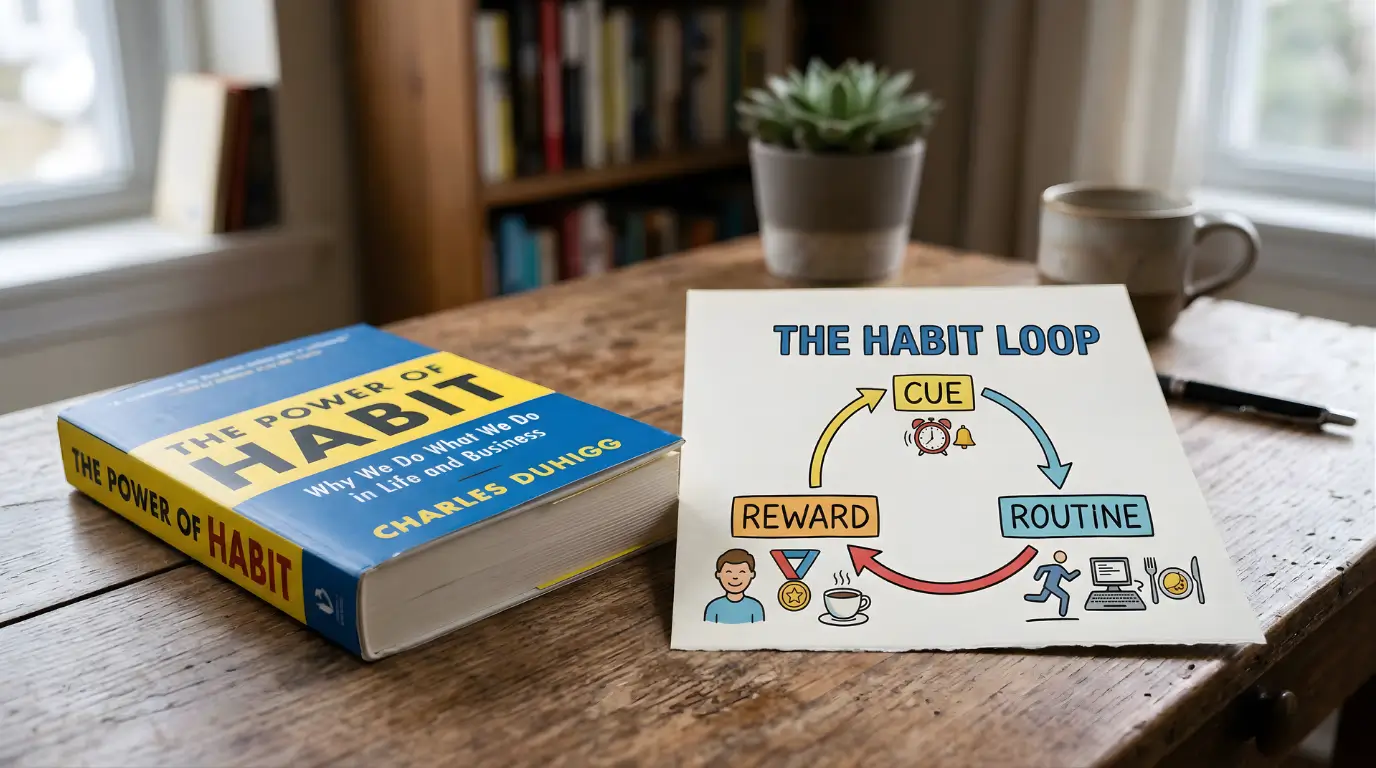
Habits shape 40% of your daily actions. Change your habits, and you change your life. But first, you need to understand how habits actually work.
Charles Duhigg takes you inside the neuroscience of habit formation. He reveals why habits exist, how they form, and most importantly, how you can change them.
The Habit Loop
Every habit follows the same pattern. Cue, routine, reward. Understanding this loop gives you the power to modify any habit.
The cue triggers your brain to enter automatic mode. The routine is the behavior itself. The reward tells your brain whether this loop is worth remembering for the future.
Here’s the key insight. You can’t simply eliminate bad habits. You have to replace the routine while keeping the same cue and reward. That’s the golden rule of habit change.
Transformative Concepts
Duhigg fills the book with fascinating case studies. How Starbucks teaches employees willpower. How Procter & Gamble turned Febreze into a billion-dollar product by creating new habits. How Tony Dungy transformed the Tampa Bay Buccaneers through habit change.
The section on organizational habits is particularly powerful. Companies have habits too. Understanding and changing them can transform entire businesses.
This productivity book gives you a framework for understanding yourself and others. Once you see the habit loops everywhere, you gain tremendous power to shape them.
Many people report that reading this book made them see their automatic behaviors clearly for the first time. That awareness alone sparks change.
10. “The ONE Thing” by Gary Keller and Jay Papasan
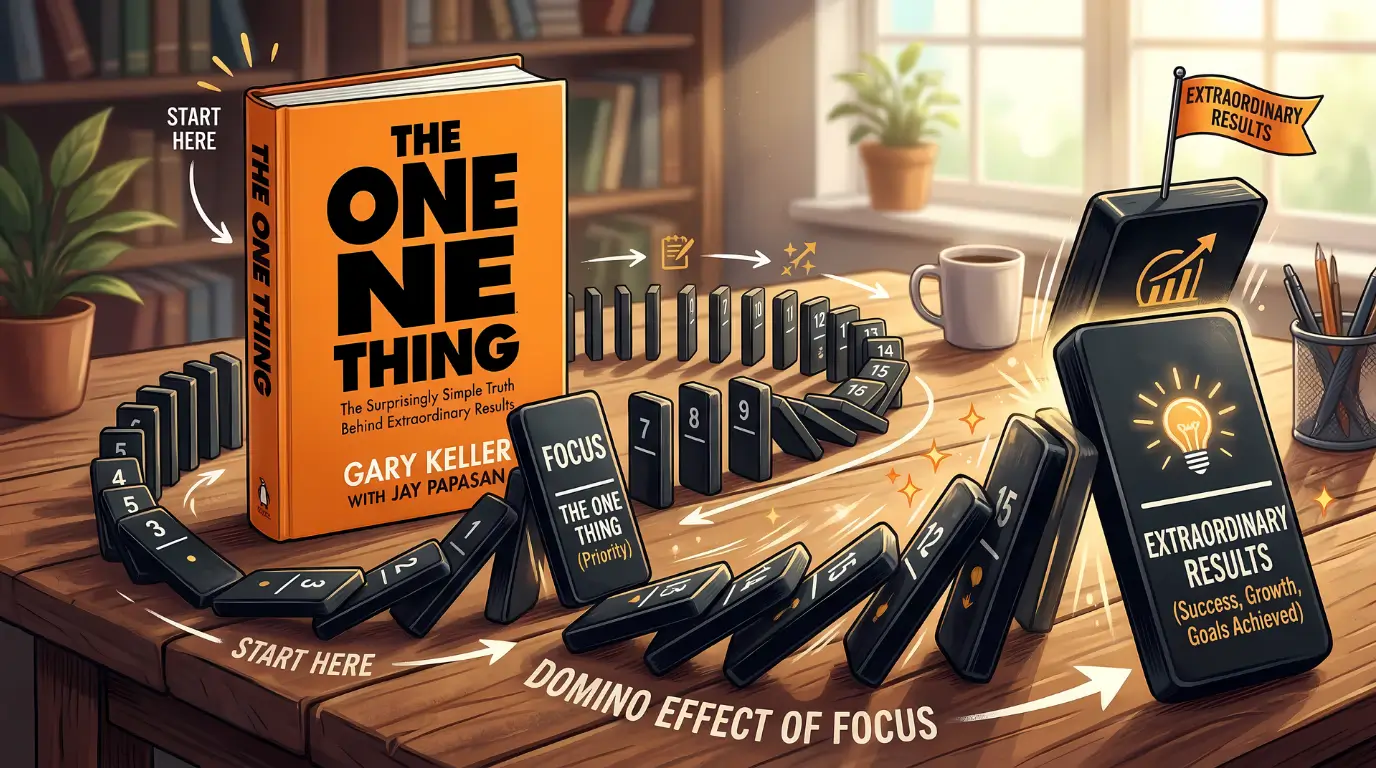
What’s the one thing you can do such that by doing it, everything else becomes easier or unnecessary?
That question drives this entire book. Gary Keller and Jay Papasan argue that extraordinary results come from focusing on one thing at a time.
The Domino Effect
A single domino can knock down another domino 50% larger than itself. Line up enough progressively larger dominoes, and the 29th domino could knock down the Empire State Building.
That’s what happens when you focus on your ONE Thing. Small focused actions create momentum that builds into extraordinary results over time.
The book debunks six lies that block success. Everything matters equally. Multitasking works. Discipline is required. Willpower is always available. Balance is achievable. Big is bad.
Each lie seems reasonable on the surface. But each one leads you astray from focused, purposeful work on what matters most.
The Focusing Question
The authors provide one question that changes everything. What’s the ONE Thing I can do such that by doing it, everything else will be easier or unnecessary?
Ask this question in every area of your life. For your career. For your health. For your relationships. For your finances. The answers point you toward the activities that create disproportionate results.
The productivity book provides specific tactics for protecting your ONE Thing time. Physical barriers. Turned off technology. Scheduled blocks on your calendar are marked as unavailable.
Many people struggle with this level of focus initially. Modern culture glorifies busyness and multitasking. Focusing on one thing feels wrong, even though it produces better results.
This book gives permission to ignore the noise. To concentrate your energy. To achieve extraordinary results through focused action.
How to Choose the Right Productivity Book for You
Ten best productivity books sit in front of you. Each one transforms lives. But which one should you read first?
The answer depends on your current challenges and goals. Different books solve different problems. Match the book to your situation for maximum impact.
If You Struggle With:
Reading Strategy
Don’t try to read all ten books at once. That defeats the purpose. These productivity books teach focus and prioritization. Apply those principles to reading them.
Choose one book based on your biggest challenge today. Read it completely. Implement at least three strategies from it. Give those strategies two weeks to become habits.
Then move to the next book. This approach ensures you actually benefit from each book instead of collecting unread titles on your shelf.
The Implementation Gap
Here’s the hard truth. Reading productivity books doesn’t make you productive. Applying what you learn does.
Many people read these books, feel inspired, then return to old habits within days. Don’t let that be you.
After finishing each book, identify three specific changes you’ll make immediately. Write them down. Put them on your calendar. Tell someone about them. Make them real.
The best productivity book is the one you actually implement. Start there.
In Summary
You’ve seen the ten best productivity books that deliver real results. Each one offers proven strategies used by millions of successful people worldwide.
Getting things done doesn’t require working harder. It requires working smarter. These books show you exactly how.
The habits highly effective people develop aren’t mysterious. They’re systematic and learnable. David Allen, Stephen Covey, Cal Newport, James Clear, and the other authors have mapped the path.
Your job? Take the first step.
Choose the book that speaks to your current challenge. Order it today. Block time on your calendar to read it. Then implement what you learn immediately.
Don’t wait for the perfect time. Perfect time doesn’t exist. Today is the day to start changing how you work and live.
These productivity books have changed millions of lives. They can change yours too. But only if you take action.
The life you want is waiting. The productivity you need is achievable. And the time to start is right now.
Pick your book. Make your plan. Take action today.
Your future self will thank you.