


Your mental health deserves attention today. Not tomorrow. Not next week. Today.
You’re juggling work deadlines, family responsibilities, and endless notifications. Your mind races. Your stress builds. You wonder if feeling overwhelmed is just part of modern life.
It doesn’t have to be. Small daily habits can lead to significant improvements in mental health. These aren’t complicated rituals requiring hours. They’re practical strategies that fit into your actual life.
Why Habits Matter for Your Mental Health
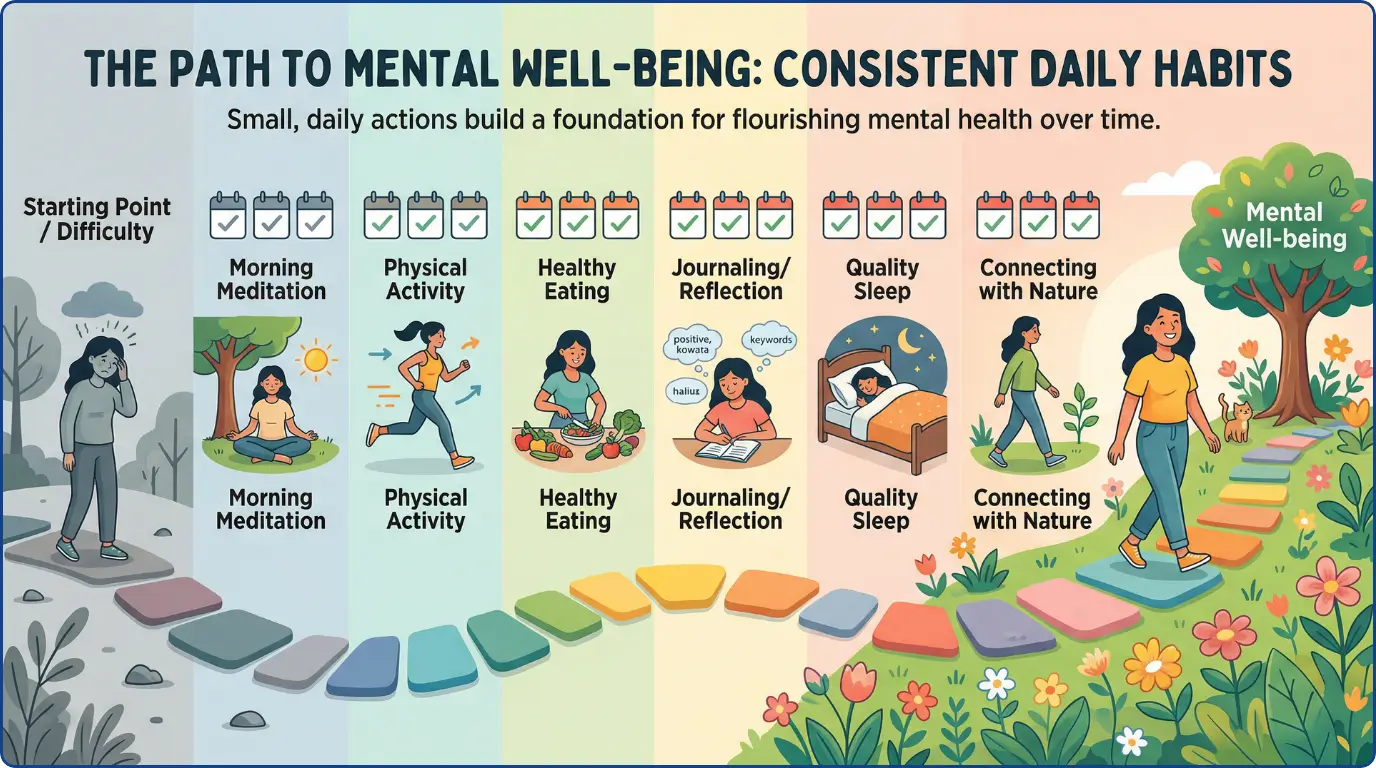
Your brain responds to patterns. Mental health isn’t about one perfect day. It’s about consistent small actions that compound over time.
Think of mental health habits like brushing your teeth. You don’t brush once and expect permanent results. You create a routine that protects your overall well-being.
Research shows daily habits reshape neural pathways. Your brain physically changes as a result of repeated behaviours. This neuroplasticity means you can literally rewire your mind for better mental health.
The habits below target different aspects of psychological wellness. Some help reduce anxiety. Others boost mood or support mental clarity. Together, they create a comprehensive approach to mental well-being.
You won’t implement all 12 today. Start with one or two that resonate. Build from there. Progress beats perfection every single time.
12 Habits That Improve Mental Health
This guide reveals 12 habits that improve mental health, backed by research and designed for busy people. Each habit takes minutes, not hours. Each creates real change in how you think and feel.
Ready to reclaim your mental well-being? Let’s start.
Habit 1: Morning Movement
Movement changes everything. Your body and mind aren’t separate systems. Physical activity directly affects brain chemistry, releasing endorphins that naturally boost mood.
You don’t need an intense workout. Ten minutes of movement in the morning activates your body and sets a positive tone for the day. This could be stretching, yoga, a short walk, or dancing to your favourite songs.
Why Morning Movement Works
Morning exercise increases blood flow to your brain. This delivers oxygen and nutrients that help reduce stress and improve focus throughout the day.
Movement also lowers cortisol, your body’s primary stress hormone. Starting your day with physical activity helps regulate your stress response for the hours ahead.
How to Implement This Habit
Physical health and mental health are deeply connected. This single habit creates momentum that carries through your entire day.
Habit 2: Gratitude Practice

Gratitude rewires your brain for positivity. When you actively notice good things, you train your mind to seek more positive experiences.
This isn’t toxic positivity. You’re not ignoring real problems. You’re balancing your mental focus to include positive elements alongside challenges.
Writing down three things you appreciate for 3 minutes each day creates measurable improvements in mood and reduces symptoms of depression over time.
The Science Behind Gratitude
Gratitude activates the prefrontal cortex, the brain region associated with decision-making and emotional regulation. Regular practice strengthens these neural connections.
Studies show people who maintain gratitude practices experience better sleep quality, reduced anxiety, and stronger social connections. The mental health benefits extend far beyond the three minutes invested.
Making Gratitude Stick
This simple habit shifts your brain’s default setting from threat-scanning to appreciation-seeking. That difference changes everything about how you experience life.
Habit 3: Intentional Breathing
Your breath is the fastest way to change your mental state. It’s always available. It costs nothing. And it works immediately to help reduce stress.
Deep breathing activates your parasympathetic nervous system. This triggers your body’s natural relaxation response, lowering heart rate and reducing anxiety within minutes.
You can practice intentional breathing anywhere: at your desk, in your car, before meetings, or when stress spikes. Two minutes transforms your nervous system.
Simple Breathing Techniques
Box breathing is particularly effective. Inhale for four counts, hold for four, exhale for four, hold for four. Repeat for two minutes. This pattern creates immediate calm.
The 4-7-8 technique also powerfully impacts anxiety. Breathe in through your nose for four counts, hold for seven, exhale through your mouth for eight. This breathing pattern activates relaxation responses.
When to Use Breath Work
Breathing grounds you in the present moment. It interrupts anxious thought spirals and reconnects you with your body’s natural wisdom.
Habit 4: Nurture Social Connections Daily
Humans are wired for connection. Social isolation damages mental health as significantly as smoking damages physical health. You need people.
Quality matters more than quantity. One meaningful conversation with a friend provides more mental health benefits than dozens of superficial social media interactions.
Spend time each day cultivating real connections. Call a friend. Text someone you care about. Have an actual conversation, not just a digital exchange.
Why Social Connections Improve Mental Health
Social connections buffer against stress. When you have strong relationships, challenges feel more manageable. You have support mental health resources in your corner.
Connection releases oxytocin, the bonding hormone that reduces anxiety and promotes feelings of safety. This neurochemical response happens through genuine human interaction.
Building Connection Habits
Digital connections count, but prioritise voice and video calls over text when possible. Hearing someone’s voice and seeing their face creates deeper neural connections.
Habit 5: Set Boundaries with Social Media
Social media impacts your mental health more than you realise. Constant comparison, endless scrolling, and manufactured perfection erode your well-being gradually.
You don’t have to quit entirely. Set clear boundaries around when and how you engage with social media. Your mind needs protection from the comparison trap.
Research links excessive social media use to increased rates of anxiety, depression, and loneliness. The platforms are designed to capture attention, not support mental health.
Creating Healthy Media Boundaries
Designate specific times for social media instead of constant checking. Maybe 15 minutes at lunch and 20 minutes in the evening. Set app timers to enforce these limits.
Remove social media apps from your phone’s home screen. This creates friction that makes mindless scrolling less automatic. You’ll think before opening these apps.
Alternative Time Investments
Notice how you feel after scrolling social media versus after other activities. Your mood and energy levels reveal the true cost of excessive media consumption.
Habit 6: Prioritize Consistent Sleep
Sleep isn’t optional for mental health. Your brain processes emotions, consolidates memories, and repairs itself during sleep. Skimp on rest, and your mental well-being suffers.
Adults need 7 to 9 hours of sleep per night. Not five. Not six. Seven to nine hours of actual sleep for optimal mental functioning.
Consistent sleep schedules regulate your circadian rhythm. Going to bed and waking at the same time daily—even on weekends—dramatically improves sleep quality and mental health.
Sleep’s Impact on Mental Health
Poor sleep increases the risk of depression and anxiety disorders. One night of insufficient rest disrupts emotional regulation for days. Chronic sleep deprivation creates serious mental health consequences over time.
Quality sleep helps your brain process difficult emotions and experiences. REM sleep specifically supports emotional resilience and helps reduce anxiety about stressful situations.
Building Better Sleep Habits
Treat sleep as non-negotiable. It’s not laziness or wasted time. Rest is productive. Sleep is essential for maintaining your mental health.
Habit 7: Spend Time in Nature Daily
Nature heals your mind. Even 20 minutes outside reduces cortisol levels, lowers blood pressure, and improves mood measurably.
Your brain evolved outdoors, not in office cubicles or living rooms. Natural environments provide psychological restoration that urban settings can’t match.
You don’t need wilderness access. A local park works. Your backyard counts. Even tree-lined streets provide mental health benefits compared to purely built environments.
Nature’s Mental Health Benefits
Natural settings reduce rumination, the repetitive negative thinking that fuels depression and anxiety. Time outdoors interrupts these thought patterns and creates mental space.
Sunlight exposure regulates your circadian rhythm and supports vitamin D production, both crucial for mood regulation. Morning light, in particular, helps synchronize your body’s natural rhythms.
Incorporating Nature into Your Day
Notice the difference in how you think and feel after time outside. Nature offers a perspective that enclosed spaces simply can’t.
Habit 8: Eat to Support Your Brain
Your brain runs on what you eat. Food directly impacts neurotransmitter production, inflammation levels, and energy regulation. Diet affects mood and mental health significantly.
This isn’t about restriction or perfect eating. Small nutritional improvements can lead to meaningful changes in mental health. Think addition, not subtraction.
Focus on foods that support mental health: fatty fish rich in omega-3s, colorful vegetables, whole grains, and adequate protein. These provide nutrients your brain needs to function optimally.
The Gut-Brain Connection
Your gut produces 90% of your body’s serotonin, a key mood-regulating neurotransmitter. A poor diet disrupts this production and directly impacts mental well-being.
Processed foods and excessive sugar trigger inflammation that affects brain function. This inflammation correlates with increased depression and anxiety symptoms.
Simple Nutrition Upgrades
Small, consistent improvements matter more than occasional perfect days. Your brain will reward sustainable changes with better mental health over time.
Habit 9: Practice Mindfulness
Mindfulness means paying attention to the present moment without judgment. It’s not about clearing your mind. It’s about noticing your thoughts and feelings without getting swept away.
You don’t need hour-long meditation sessions. Mindfulness moments throughout your day can lead to significant improvements in your mental health. Even 60 seconds of focused awareness helps reduce stress.
This practice trains your brain to respond rather than react. You create space between stimulus and response where choice lives.
Mindfulness and Mental Health
Research shows mindfulness reduces symptoms of anxiety and depression. It strengthens the prefrontal cortex, improving emotional regulation and decision-making.
Mindfulness interrupts automatic negative thought patterns. Instead of getting lost in worries about the future or regrets about the past, you anchor in what’s actually happening now.
Easy Mindfulness Practices
Mindfulness isn’t an escape from life. It’s a fuller engagement with life as it actually is. This difference creates profound mental health benefits.
Habit 10: Engage in Creative Expression

Creativity is medicine for your mind. Engaging in creative activities—writing, painting, music, cooking, gardening—provides emotional release and mental clarity.
You don’t need talent or skill. The mental health benefits come from the process, not the product. Creation itself is healing.
Creative expression activates different brain networks than analytical thinking. This gives your problem-solving mind a break and engages parts of yourself that might feel neglected.
Why Creativity Supports Mental Health
Creative activities induce flow states in which you lose track of time, and worries fade. This mental state provides relief from anxiety and rumination.
Expression helps process difficult emotions. Sometimes feelings need release through creation rather than words. Art, music, and movement access emotional experiences that verbal language can’t reach.
Simple Creative Practices
Release expectations about outcomes. The purpose isn’t creating masterpieces. The purpose is to engage your creative spirit in the service of mental well-being.
Habit 11: Set and Maintain Boundaries
Boundaries protect your mental health. Saying no to things that drain you isn’t selfish. It’s essential self-preservation.
Many mental health struggles stem from overcommitment and the inability to set limits. You can’t pour from an empty cup. Boundaries ensure you maintain what you need to function.
Clear boundaries reduce resentment, prevent burnout, and create space for activities and people that genuinely support your well-being.
Types of Boundaries That Matter
Time boundaries protect your schedule. Not every request deserves your immediate yes. “Let me check my calendar and get back to you” creates space for thoughtful decisions.
Emotional boundaries protect your energy. You can care about someone without absorbing their emotions or making their problems yours to solve.
Implementing Healthy Boundaries
Boundaries aren’t walls. They’re fences with gates. You control what and who you allow into your mental and emotional space. This control is essential for mental health.
Habit 12: Connect to Purpose and Contribution
Purpose fuels mental health. When your life feels meaningful, challenges become more bearable. When you contribute beyond yourself, perspective shifts.
You don’t need to solve world hunger. Small contributions matter. Helping a neighbor. Volunteering locally. Using your skills to benefit others. These actions benefit your mental health while helping others.
People with a strong sense of purpose experience lower rates of depression and anxiety. Contribution connects you to something larger than your individual concerns.
Finding Your Purpose
Purpose doesn’t require grand gestures. It lives in everyday moments where your actions align with your values and benefit others beyond yourself.
Ask yourself: What problems in the world concern you most? What skills or resources do you have to address these concerns, even in small ways?
Building Purpose into Your Life
Contribution creates connection and meaning simultaneously. Both are essential ingredients in sustained mental health and overall well-being.
Conclusion
These 12 habits that improve mental health aren’t theoretical. They’re practical tools you can implement immediately. Each one requires minutes, not hours. Each one creates real change.
You don’t have to be perfect. Start with one habit. Master it. Add another. Small, consistent actions compound into life-changing results over time.
Your mental health deserves this investment. You deserve to feel better, think more clearly, and experience more joy in your daily life.
Quick-Start Habits (Under 5 Minutes)
Lifestyle Integration Habits
Remember: transformation happens in moments, not milestones. Today matters. This week matters. The habits you build now create the mental health you experience tomorrow.
Mental health isn’t a destination you reach. It’s an ongoing practice you cultivate. These 12 habits provide the framework for that cultivation.
You have the power to change your mental health today. These habits are your roadmap. The only question is: which one will you start with right now?